

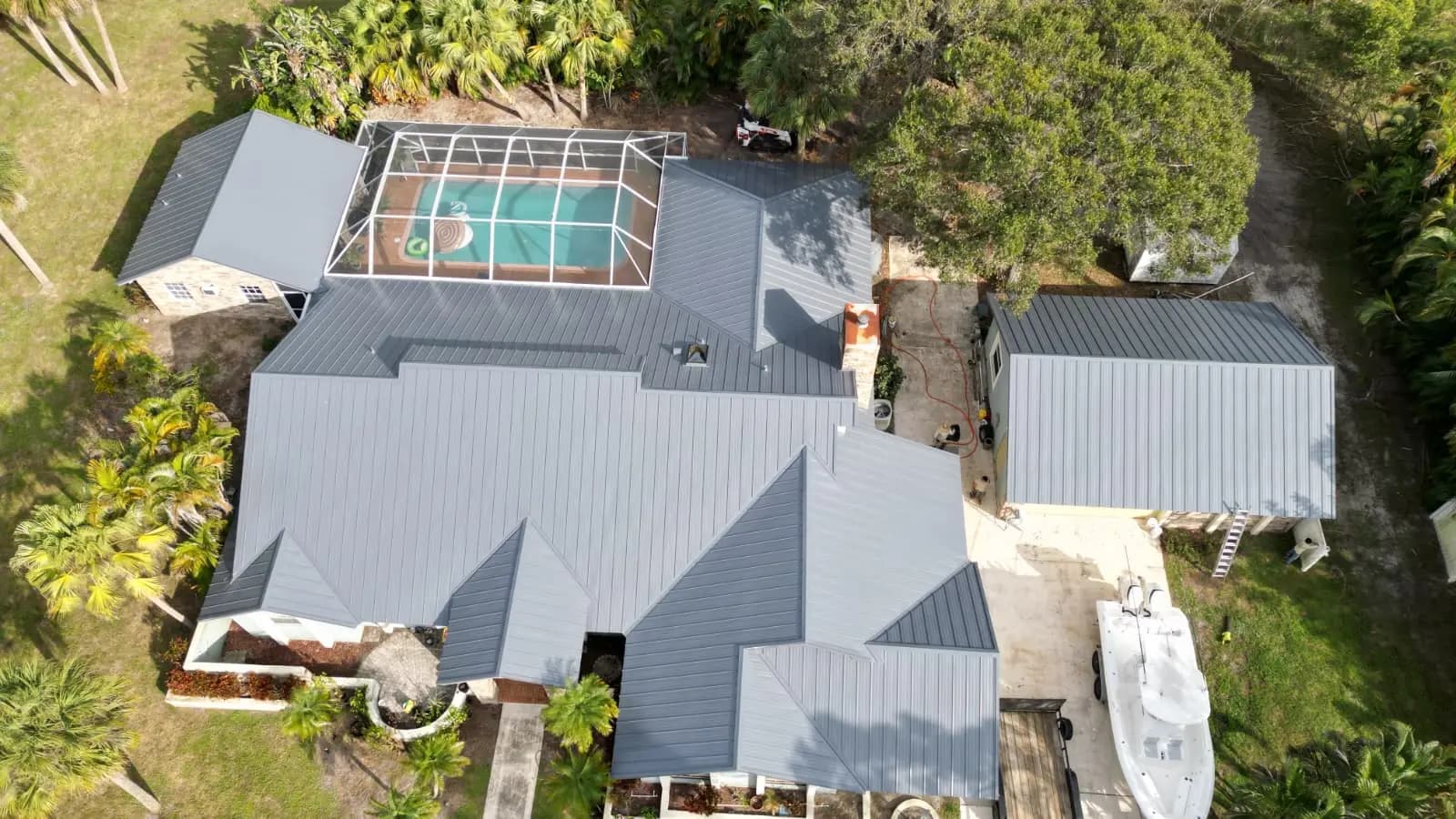
Materials guide
Metal vs tile roofing in Florida
Both hold up in hurricane country when installed to code. Across Florida, installed costs for metal typically run about $10 to $20 per square foot and metal systems commonly last 40 to 70 years; tile typically runs about $15 to $25 per square foot with concrete and clay tile lasting 40 to 50 years and longer. Metal standing seam carries the highest wind ratings, while tile's practical service life is often limited by its underlayment, not the tile.
★ 5.0★ · 60 Reviews
Last updated:
Metal roofing in Port St. Lucie
How do metal and tile compare at a glance?
Both hold up in hurricane country when they are installed to code. The useful differences are installed cost, weight, published wind rating, and what actually ends the service life — the panel on metal, the underlayment on tile.
The table uses Florida market ranges from published industry sources. An actual quote depends on roof size, pitch, complexity, and material selection. These are not prices Reliable Roofer charges.
| Comparison | Metal (standing seam / metal tile) | Concrete or clay tile |
|---|---|---|
| Installed cost, typical Florida range | ~$10–$20 per sq ft | ~$15–$25 per sq ft |
| Common service life | 40–70+ years | 40–50+ years concrete; clay longer |
| Wind rating when installed to spec | Commonly 140–180 mph | Commonly 150–180 mph mechanically fastened |
| Weight | Light | Heavy — the structure must support it |
| Underlayment factor | Replaced with the panel system | Underlayment often the limiting layer at ~20–25 years |
| Energy | Reflective; reported cooling reductions around 10–25% | Thermal mass with a ventilated batten space |
| Repairability | Panel-level | Individual tiles replaceable if the profile is still made |
Which roof holds up better in a hurricane?
Correctly engineered and fastened, both perform. Standing-seam metal carries the top published wind ratings, and tile performs strongly when it is mechanically fastened per code. Installation quality and the fastening pattern matter more than the material label on the proposal.
A fastener pattern that does not match the product approval fails the inspection and fails in the wind, whether the label says metal or tile. Hidden-fastener metal and foam-set tile also trigger St. Lucie County's in-progress inspection. Ask for the fastening pattern in writing before you compare two bids.
Which lasts longer in Florida's climate?
Metal commonly lasts 40 to 70 years, and near salt water the watch-out is corrosion at fasteners and trim. Concrete and clay tile commonly last 40 to 50 years and longer, but the underlayment often limits the system at about 20 to 25 years. A 50-year tile roof can still need an underlayment replacement at mid-life.
Salt air is harder on fasteners, drip edge, and flashing than on the field of either system. A metal roof near the water needs that corrosion detail in the scope. A tile roof needs an honest underlayment date, not only a count of cracked tiles. The coastal maintenance guide is the checklist for both.
Does a metal roof lower my insurance premium?
Premium credits, when a carrier offers them, come from wind-mitigation features — roof cover, roof-deck attachment, and secondary water resistance — not from the word metal on the contract. Some sources report metal being treated differently from shingles under roof-age underwriting rules. This page does not promise a dollar amount or a specific discount.
Ask your own carrier what your policy credits. Wind-mitigation forms look at roof cover, how the deck is nailed, and whether there is a secondary water barrier. A contractor cannot quote your premium from the driveway.
Can my house support a tile roof?
Tile is heavy. A house that was not built for it can need reinforcement before the first tile goes on. That is a load question for the building official and the engineer of record, not a sales question.
If the house was framed for shingle or metal, adding tile is a structural question before it is a style question. The building official can require an engineer's letter. Do not let a bid skip that step to win the job.
Which should I choose for my home?
If you want the lowest lifetime cost and the highest published wind rating, start with metal. If the house is Mediterranean or Spanish and the structure can carry the weight, start with tile. If you are unsure, get an inspection first, then a spec'd quote for both.
- Lowest lifetime cost and highest published wind rating — start with metal.
- Mediterranean or Spanish architecture, a neighborhood that is already tile, and a structure that can carry the weight — start with tile.
- Unsure — inspection first, then a spec'd quote for both.
Does Reliable Roofer install both metal and tile?
Reliable Roofer, Inc. installs standing-seam metal and other metal systems, and repairs and reroofs concrete and clay tile. The written estimate names the system before material is ordered. Panel profile, color, and the specific tile are confirmed in that scope — they are not picked from a slogan on this page.
The metal page describes standing-seam reroofs and other metal systems the crew already installs. The tile page describes repair and reroof of concrete and clay tile, including underlayment replacement when that is the failure. Shingle remains an option when it is the honest spend. Product lines and profiles are named on the estimate, not invented here.
Questions from this guide
Correctly engineered and fastened, both perform. Standing-seam metal carries the top published wind ratings, and tile performs strongly when it is mechanically fastened per code. Installation quality and the fastening pattern matter more than the material label on the proposal.
Metal commonly lasts 40 to 70 years, and near salt water the watch-out is corrosion at fasteners and trim. Concrete and clay tile commonly last 40 to 50 years and longer, but the underlayment often limits the system at about 20 to 25 years. A 50-year tile roof can still need an underlayment replacement at mid-life.
Premium credits, when a carrier offers them, come from wind-mitigation features — roof cover, roof-deck attachment, and secondary water resistance — not from the word metal on the contract. Some sources report metal being treated differently from shingles under roof-age underwriting rules. This page does not promise a dollar amount or a specific discount.
Tile is heavy. A house that was not built for it can need reinforcement before the first tile goes on. That is a load question for the building official and the engineer of record, not a sales question.
Reliable Roofer, Inc. installs standing-seam metal and other metal systems, and repairs and reroofs concrete and clay tile. The written estimate names the system before material is ordered. Panel profile, color, and the specific tile are confirmed in that scope — they are not picked from a slogan on this page.
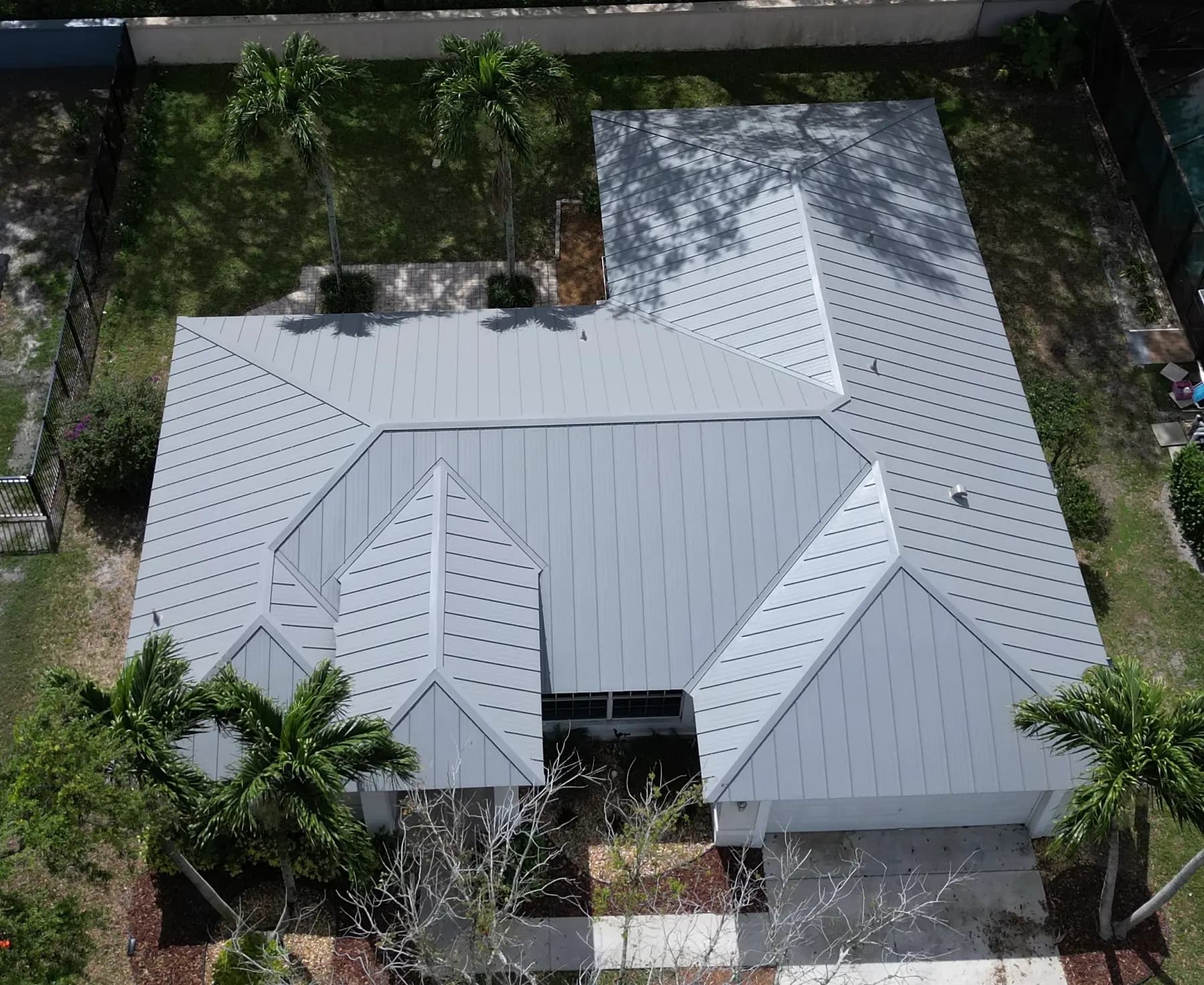
Next step
Which system should I price on my house?
Call (772) 867-0000 for a free inspection and a written scope. Reliable Roofer, Inc. will say when metal, tile, or shingle is the honest spend. Calls answered 7:00 AM–7:00 PM daily. Call the shop or send the address for a written estimate.
Call (772) 867-0000Reliable Roofer · 5.0★ · 60 Reviews · BBB A+