

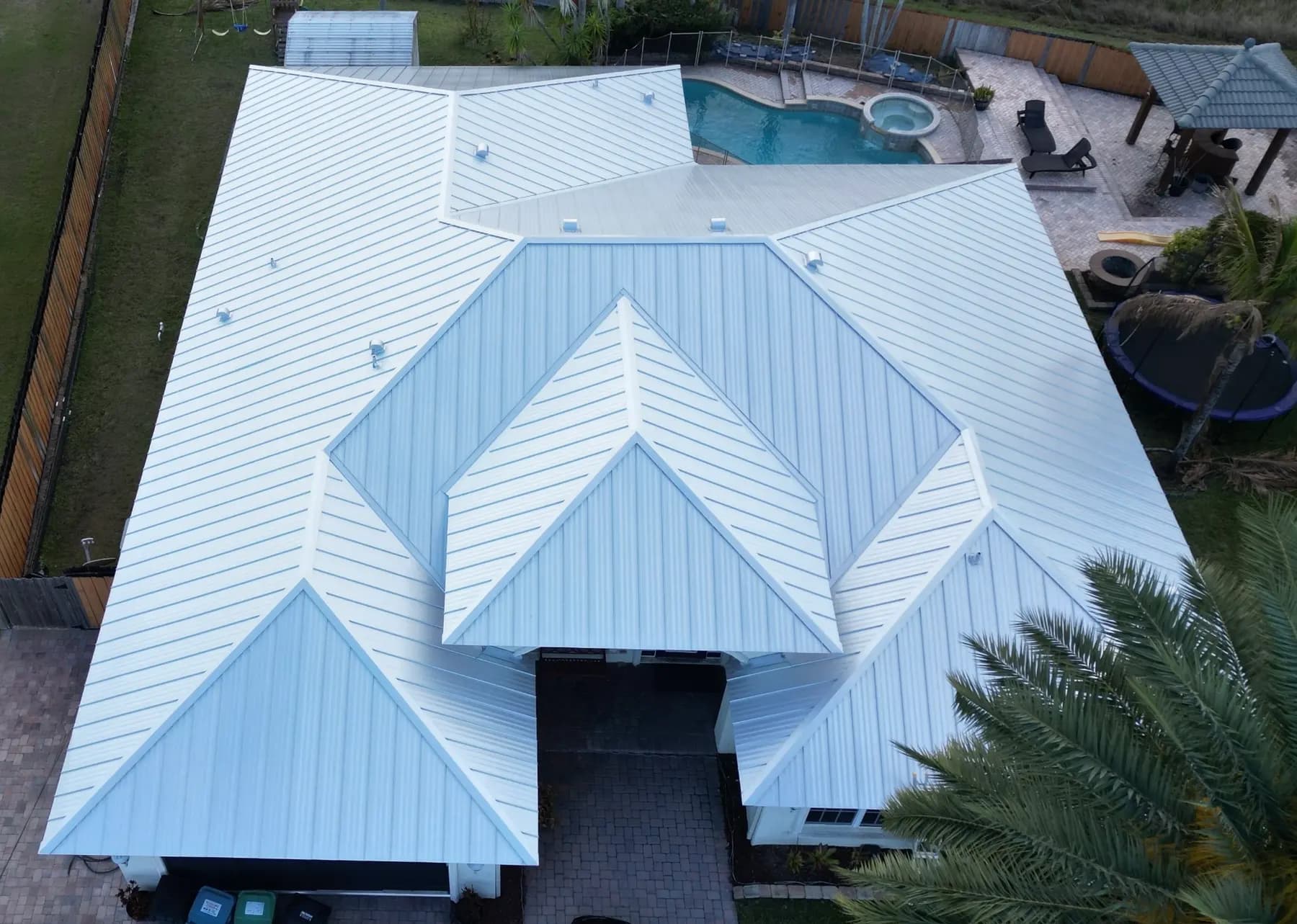
Maintenance guide
Roof inspection and maintenance for Florida coastal homes
On the coast, inspect your roof twice a year — once before hurricane season starts in June and again after it ends on November 30 — plus after any major wind event or new leak. Salt air attacks fasteners, flashing, and perimeter metal faster than it damages the roof covering itself, so the failures usually start at the edges and penetrations.
★ 5.0★ · 60 Reviews
Last updated:
Free roof inspection in Port St. Lucie
How often should a coastal Florida roof be inspected?
On the coast, inspect twice a year — once before hurricane season starts in June and again after it ends on November 30 — plus after any major wind event or new leak. Inland roofs are often looked at about once a year. Tie the two coastal visits to those season bookends so the habit is easy to remember.
Hurricane season on the Atlantic runs from June 1 through November 30. A May or early-June visit catches what winter left loose. The December visit catches what the season did. A new stain or a named wind event is its own visit, not something you save for the next calendar reminder.
What does salt air do to a roof?
Salt air corrodes fasteners, drip edge, perimeter metal, vents, and flashing faster than it wears out the field of the roof. Coatings break down, metal stains with rust, and sealant at the joints fails early. The covering can look fine from the street while the attachments that hold it down are giving up.
That is why a coastal roof can pass a glance from the street and still be losing the fasteners, drip edge, and pipe flashings that keep it on the house. The field of shingles, tile, or metal is often the last thing to show the problem.
What should be on a coastal roof maintenance checklist?
A coastal maintenance pass checks the edges, the penetrations, and the drainage before it worries about the field. Clear debris, rinse salt the way the manufacturer allows, and keep the paperwork with the photos.
- Inspect the edges and penetrations. Perimeter metal, ridge caps, flashings, fasteners, and sealant joints.
- Remove leaves and debris. Anything that traps moisture or blocks drainage.
- Watch the metal and the trim. Coating damage, rust staining, oxidation, loose trim, and displaced material.
- Keep gutters and downspouts clear. Water that backs up at the roof edge gets under the covering.
- Rinse salt the way the manufacturer allows. Follow the cleaning instructions and avoid aggressive pressure washing.
- Limit roof access. Unqualified trades, and any work around solar, HVAC, or antennas, should be documented.
- Keep the paperwork together. Product, warranty, permit, and repair records.
What is the pre-hurricane-season roof checklist?
In May or early June, secure loose material, clear gutters and downspouts, and check penetrations and perimeter metal. Photograph the roof's current condition, and confirm you can put your hands on the permit and product documentation before the season starts.
- Secure loose ridge, edge metal, and any material a gust can lift
- Clear gutters, downspouts, and scuppers so water can leave
- Check pipe boots, chimney flashing, and skylight curbs
- Photograph all four elevations and the attic if you can reach it safely
- Put the last permit, product approvals, and warranty papers where you can find them
What is the post-season checklist?
In December, look for what a season of wind and water left behind: lifted or missing material, a displaced ridge, fastener backout, and cracked sealant. Inside, check ceiling stains and attic moisture that one rain does not explain.
- Lifted or missing shingles, tile, or panels
- A ridge cap that has shifted
- Fasteners that have backed out
- Sealant that has cracked at flashing and penetrations
- New ceiling stains
- Attic moisture or daylight that was not there in May
What are the early warning signs my roof needs attention?
Granules in the gutters, cracked or slipped tile, and rust stains are early. Daylight in the attic, a musty attic smell, ceiling stains, sagging planes, and a leak that returns in the same spot mean the roof needs a professional look now.
A leak that returns in the same room after a 'small repair' is telling you the entry point was missed or the surrounding material will not hold a patch. That is a repair-versus-replace conversation, not another tube of sealant.
Why do inspection records matter for insurance?
A prior inspection report, the last reroof permit or invoice, and maintenance records are exactly the documentation a carrier asks for when you file a storm claim. Photograph the roof while it is healthy so a later claim has a before.
When a storm hits, the carrier asks what the roof looked like before the date of loss. A May photo set, the last reroof permit, and a short note of what was maintained are the file you wish you had. The storm guide covers what to capture in the first 48 hours after the damage.
What does a professional roof inspection include?
A professional inspection from this shop is a documented walk of the roof and, when access allows, the attic. You receive photos and a written next step — repair, replacement, or not yet — checked against the coastal list: perimeter metal, flashings, fasteners, sealant, drainage, and interior stains. Reliable Roofer, Inc. publishes that visit as a free roof inspection with a written estimate. Call (772) 867-0000.
The same list you can walk from the ground is what the crew photographs up close: edges, fasteners, flashings, drainage, and the attic when access is safe. You leave with photos and a written next step. A paid lender or third-party certification is a different product — ask if that is the letter you need. This site does not describe a standing maintenance contract.
Questions from this guide
On the coast, inspect twice a year — once before hurricane season starts in June and again after it ends on November 30 — plus after any major wind event or new leak. Inland roofs are often looked at about once a year. Tie the two coastal visits to those season bookends so the habit is easy to remember.
Salt air corrodes fasteners, drip edge, perimeter metal, vents, and flashing faster than it wears out the field of the roof. Coatings break down, metal stains with rust, and sealant at the joints fails early. The covering can look fine from the street while the attachments that hold it down are giving up.
A prior inspection report, the last reroof permit or invoice, and maintenance records are exactly the documentation a carrier asks for when you file a storm claim. Photograph the roof while it is healthy so a later claim has a before.
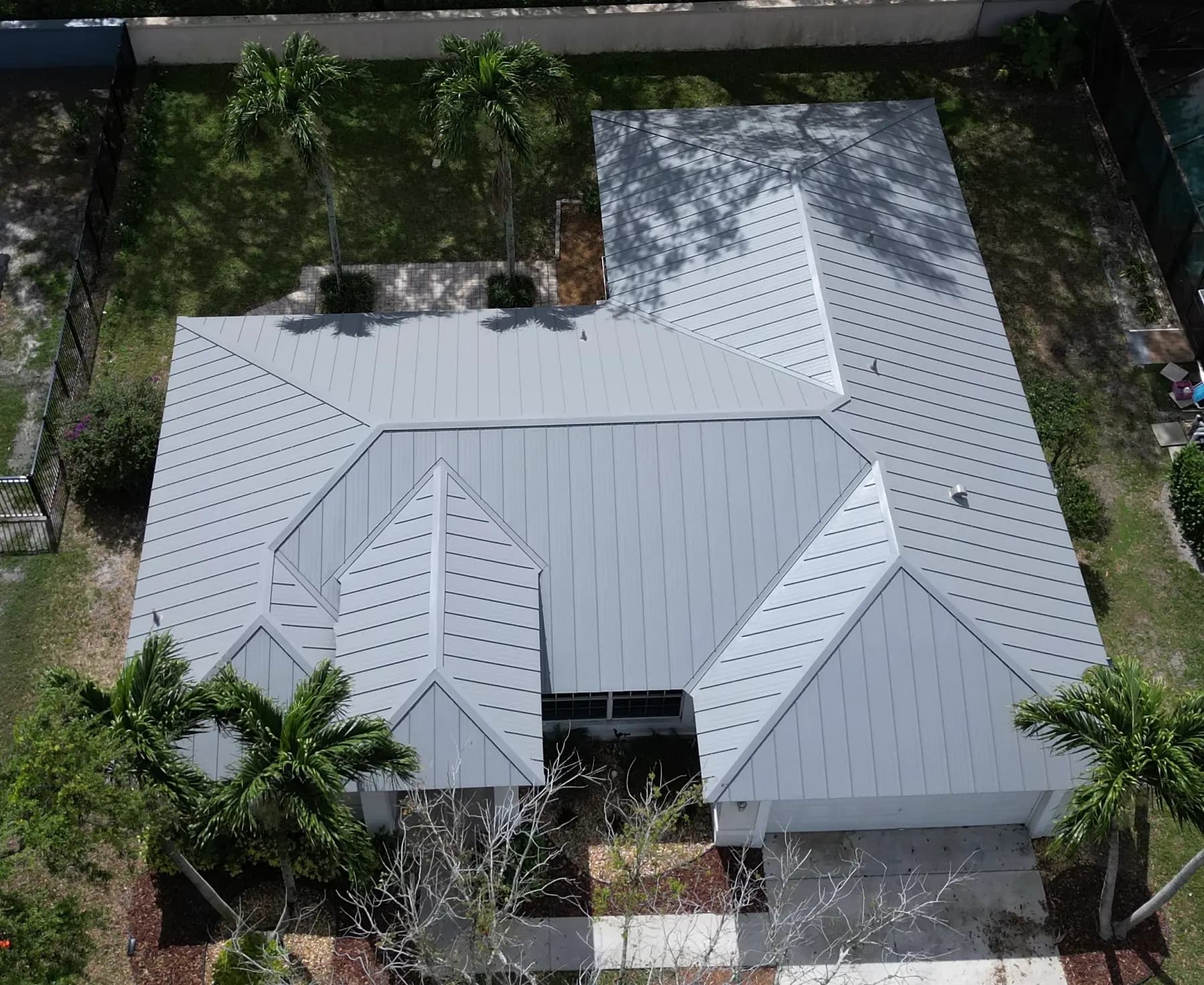
Next step
When should I book the inspection?
Call (772) 867-0000 before June, after November 30, or when a leak shows up. Calls answered 7:00 AM–7:00 PM daily. Call the shop or send the address for a written estimate.
Call (772) 867-0000Reliable Roofer · 5.0★ · 60 Reviews · BBB A+