

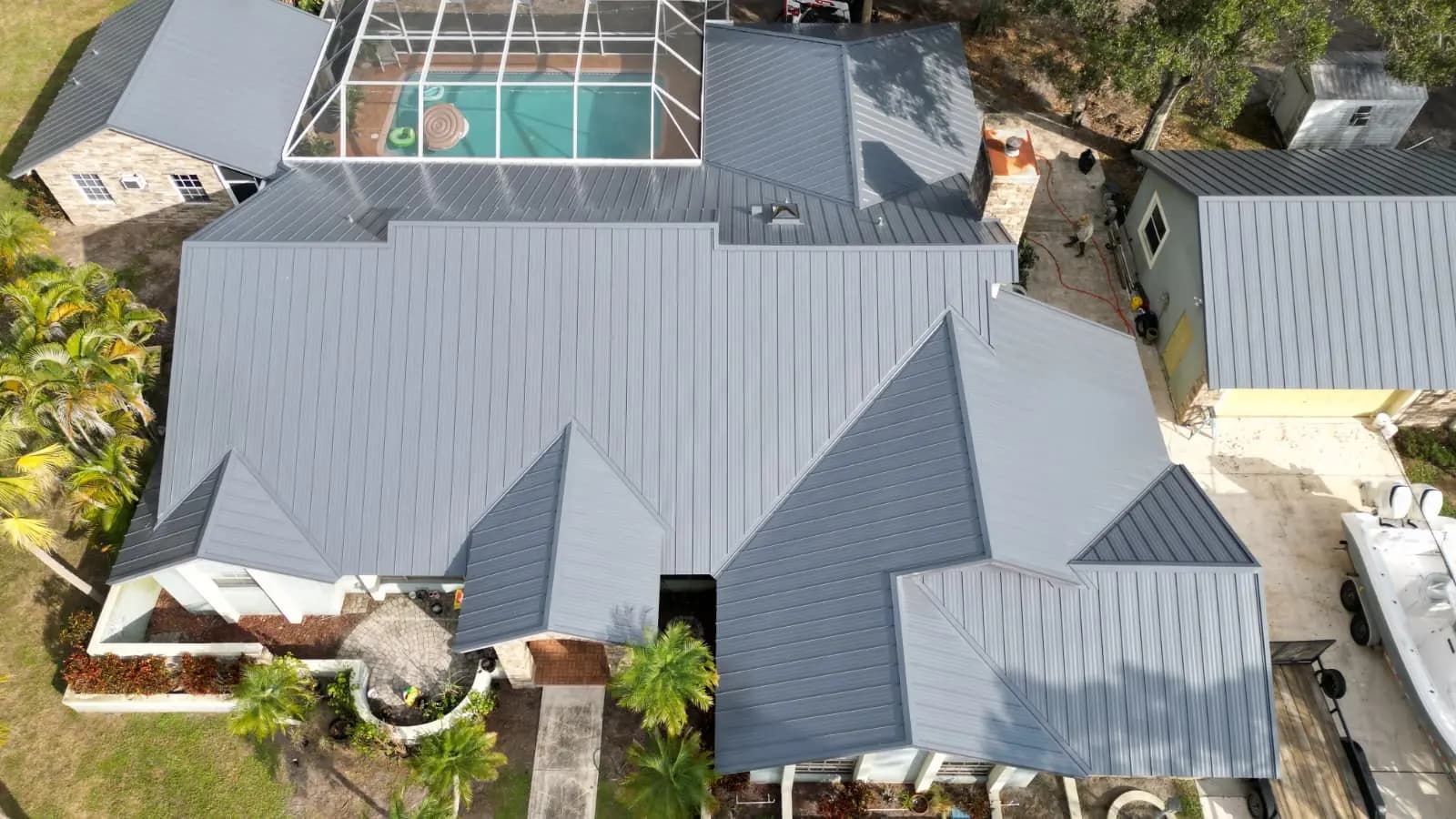
Permit guide
Roof replacement in St. Lucie County: permits, inspections, and the 25% rule
A permit is required for reroof work in St. Lucie County, and any reroof exceeding 25% of the existing roof area within a 12-month period must comply with Section 706.7 of the Florida Existing Building Code. Your licensed contractor pulls the permit, the job passes a decking inspection (or files a decking affidavit), then dry-in, then a final inspection after cleanup.
★ 5.0★ · 60 Reviews
Last updated:
Roof replacement in Port St. Lucie
Do I need a permit to replace my roof in St. Lucie County?
Yes. St. Lucie County requires a permit for all roof and reroof work, and a permit is specifically required for any reroof exceeding 25% of the existing roof area within a 12-month period. Permits and inspection requests are handled through the county's EnerGov system. A final inspection is required on all roof and reroof permits.
Your licensed contractor pulls the permit. Reliable Roofer, Inc. (State of Florida Certified Roofing Contractor CCC1334854) does not ask you to sign the application as owner-builder so the crew can skip that step. Owner-builder on a residential reroof shifts the liability to you.
What is Florida's 25% roof rule?
Section 706.1.1 of the Florida Building Code, Existing Building states that not more than 25 percent of the total roof area or roof section may be repaired, replaced, or recovered in any 12-month period unless the roof covering on the entire existing roof system or roof section is replaced or recovered to conform to current code. The trigger is cumulative across 12 months, not per job — two 15% repairs in the same year can cross it.
The percentage is of the roof area or the roof section, measured across any 12-month period. A spring patch and a fall patch count together. That is why a 'small repair' on a roof that was already opened earlier in the year can become a code conversation.
Does the 25% rule still force a full replacement?
Not always. Under Florida Statute 553.844(5), enacted by Senate Bill 4-D in 2022, if the existing roofing system or roof section was built, repaired, or replaced in compliance with the 2007 Florida Building Code or any later edition, only the repaired, replaced, or recovered portion must meet the code in effect — and local governments cannot amend that exception by ordinance. In practice the dividing line is permit history; roofs permitted under the 2007 code or later, generally on or after March 1, 2009, get the benefit. Older roofs remain subject to full replacement when repairs cross the threshold.
| Your roof's permit history | What the 25% rule means for you |
|---|---|
| Built, repaired, or replaced to the 2007 Florida Building Code or later | Only the worked-on portion must meet current code, subject to the building official's review |
| Cannot be shown to comply with the 2007 Florida Building Code or later | Crossing 25% in a 12-month period can require the full roof section be brought to current code |
What inspections does a St. Lucie County reroof go through?
A St. Lucie County reroof passes a sheathing or decking inspection, or files a decking affidavit, then a dry-in inspection, then an in-progress inspection when the fastening is hidden, and a final inspection after cleanup. St. Lucie County's roof and reroof inspection procedure requires that final inspection on every roof and reroof permit.
St. Lucie County's roof and reroof inspection procedure is the sequence above. The final inspection is not called while the dumpster is still in the driveway.
- Sheathing / decking inspection. Pass it, or upload a completed Roof Decking Affidavit and photo template to the permit folder, before calling for dry-in. If the contractor or roof type does not qualify for the affidavit, the decking inspection must be scheduled and passed.
- Dry-in inspection. The roof must be 100% dried in, with covering laid over no more than 25% of the roof area at the time of inspection.
- In-progress inspection. Required for metal using hidden fasteners and for tile set with foam adhesive or other hidden fastening methods.
- Final inspection. Required on all roof and reroof permits, called after installation is complete, the site is cleaned, and the dumpster is removed.
Are Florida's roofing code requirements changing?
Yes. Florida's 9th Edition Building Code takes effect December 31, 2026, bringing ASCE 7-22 wind-load provisions and reroofing changes. Treat that date as a timing note for a job that will still be in permitting, not as a reason to assume today's written quote will change.
This page does not predict how the 9th Edition will price a specific house, and it does not change a scope that is already written under the code in effect today. If your permit will still be open on December 31, 2026, ask the building official which edition applies to that application.
How long does a roof replacement take?
A replacement runs through permit review, tear-off, decking repair, dry-in, the covering install, and the inspections. Inspection scheduling, weather, and decking surprises drive the calendar more than the name of the material. Reliable Roofer, Inc. confirms timing on the written scope for your roof and does not publish a one-size day count.
Decking that has to be replaced after tear-off adds time because the dry-in inspection cannot happen on a deck that is not ready. Rain days and the county's inspection calendar sit outside the crew's control. The written scope is where timing gets stated for your roof.
Will insurance pay for my roof replacement?
Insurance covers sudden damage from a covered event, not age or wear. If the damage is storm-related, Florida Statute 627.70132's one-year notice deadline applies. A worn roof is a replacement conversation with you, not an automatic claim.
If a storm opened the roof, report it inside the Florida Statute 627.70132 window and keep the photos from the first 48 hours. Age, granule loss, and a roof that was already tired are not the same fact as a covered opening.
Questions from this guide
Yes. St. Lucie County requires a permit for all roof and reroof work, and a permit is specifically required for any reroof exceeding 25% of the existing roof area within a 12-month period. Permits and inspection requests are handled through the county's EnerGov system. A final inspection is required on all roof and reroof permits.
Section 706.1.1 of the Florida Building Code, Existing Building states that not more than 25 percent of the total roof area or roof section may be repaired, replaced, or recovered in any 12-month period unless the roof covering on the entire existing roof system or roof section is replaced or recovered to conform to current code. The trigger is cumulative across 12 months, not per job — two 15% repairs in the same year can cross it.
Not always. Under Florida Statute 553.844(5), enacted by Senate Bill 4-D in 2022, if the existing roofing system or roof section was built, repaired, or replaced in compliance with the 2007 Florida Building Code or any later edition, only the repaired, replaced, or recovered portion must meet the code in effect — and local governments cannot amend that exception by ordinance. In practice the dividing line is permit history; roofs permitted under the 2007 code or later, generally on or after March 1, 2009, get the benefit. Older roofs remain subject to full replacement when repairs cross the threshold.
A St. Lucie County reroof passes a sheathing or decking inspection, or files a decking affidavit, then a dry-in inspection, then an in-progress inspection when the fastening is hidden, and a final inspection after cleanup. St. Lucie County's roof and reroof inspection procedure requires that final inspection on every roof and reroof permit.
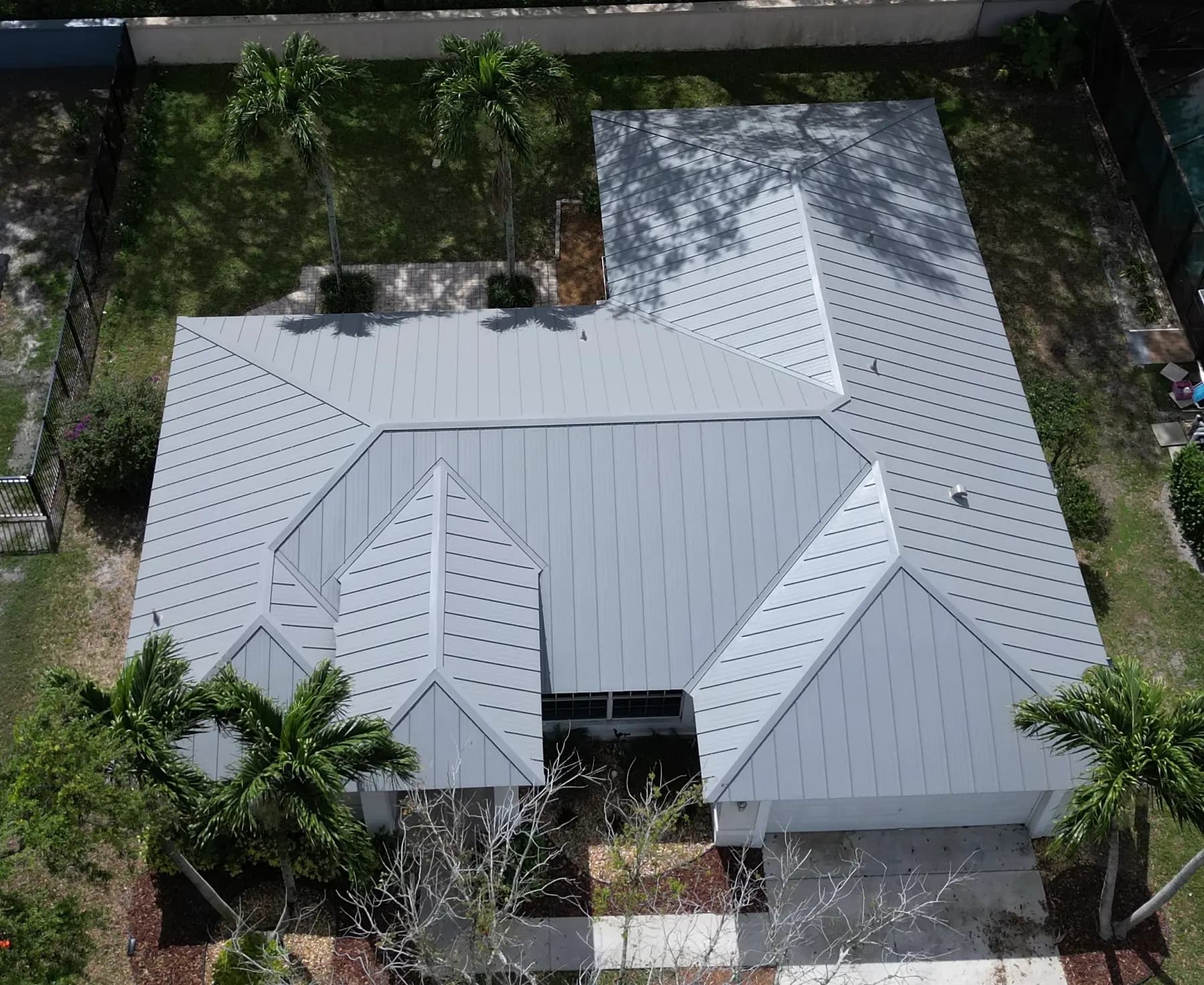
Next step
Who pulls the permit on my replacement?
The licensed contractor does. Call (772) 867-0000 for a written scope. License CCC1334854. Calls answered 7:00 AM–7:00 PM daily. Call the shop or send the address for a written estimate.
Call (772) 867-0000Reliable Roofer · 5.0★ · 60 Reviews · BBB A+